Platform / Overview
Platform

Indoor environmental intelligence that connects risk, action, and proof

The platform connects measurement, spatial context, AI-enabled interpretation, and verification so teams can move from scattered signals to defensible decisions.

The platform
A closed-loop operating system
Why the platform

The old approach leaves teams with fragments

Smoke-readiness plans, infection-season concerns, local observations, building systems, and one-time measurements rarely add up to a clear operating picture. Organizations need to know where risk is concentrated, what deserves attention first, and whether the response is working.

Today: fragmented

Disconnected pieces of the puzzle

  • Readiness plans live in static documents
  • Observations are local and undocumented
  • Measurements focus on equipment operations
  • Smoke and infection-season risks are hard to compare across sites
  • Improvement is hard to verify
With Metalmark: decision-driven

One system that connects indoor environmental intelligence to verified outcomes

  • A defensible baseline across priority sites
  • Spatial intelligence over infection-season, smoke-readiness, and indoor environmental conditions
  • Practical action priorities
  • Targeted intervention guidance
  • Documented improvement teams can defend
  • One operating layer across contexts
The closed-loop system

Measure, interpret, recommend, act, and verify

Each stage informs the next and produces something operating teams can use to make decisions, assign resources, and verify progress.

01
Measure
Create a structured baseline across priority sites and spaces.
02
Interpret
Use AI-enabled analytics to turn measured conditions into spatial intelligence and risk visibility.
03
Recommend
Translate findings into practical action priorities teams can evaluate.
04
Act
Support targeted interventions, operating guidance, and implementation decisions.
05
Verify
Document improvement and build a defensible record for stakeholders.
Digital capabilities

A 3D spatial operating view for indoor environmental decisions

Metalmark connects site geometry, sensing, smoke-readiness indicators, infection-season context, and action priorities into a visual operating layer that helps teams see where conditions matter and what to do next.

Show priority spaces, floors, and zones in context

Map IEQ signals and risk patterns to real locations

Guide recommendations, planning, and verification
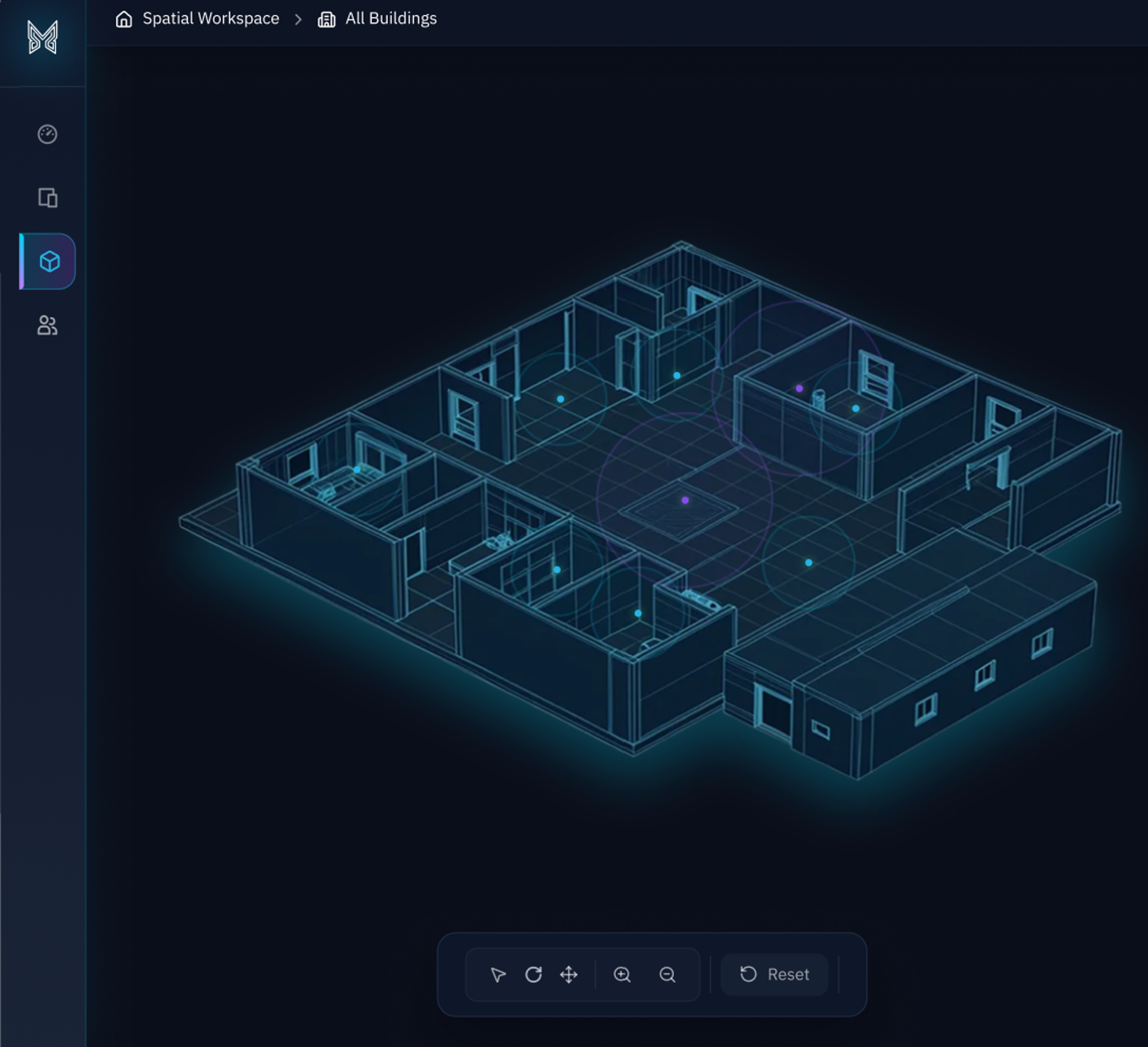
3D spatial operating view for Metalmark platform capabilities
Built for multi-site organizations

Designed for organizations where consistency matters

Metalmark is built for networks and high-accountability environments that need more than isolated improvements. It supports site comparison, vulnerability identification, readiness planning, intervention prioritization, and verification across operating contexts.

Clinical and healthcare networks

Make environmental consistency more visible, governable, and defensible.

Campuses and schools

Support defensible decisions across complex occupied environments.

Hospitality and workplaces

Make environmental quality part of operational differentiation.

Standards context

Built for the new operating reality in indoor environmental health: wildfire smoke readiness, infectious aerosol control, and practical clean-air planning aligned with ASHRAE Guideline 44 and Standard 241.

ASHRAE Guideline 44ASHRAE Standard 241
Next step

See what a representative-site assessment would produce

Start a conversation

See how the platform would work across your sites

Share the operating context you want to evaluate. Metalmark can help identify the right assessment starting point, platform components, and verification path.

Platform fit
For teams evaluating how measurement, AI-enabled analytics, action priorities, and verification connect.
Multi-site assessment
For organizations comparing risk, readiness, and consistency across locations.
General inquiry
A Metalmark team member will follow up. We do not share inquiry details.
Thank you.
A member of the Metalmark team will follow up to discuss the right starting point.